Sunday, January 31, 2016

Q&A: Lobbying Western Governments?

The following is a Q&A from the archives, during the time of Sheikh Abdul Qadeem Zalloom:


Question: Is it allowed for Muslims in the West to form lobby groups that lobby the government? Is it allowed to ask them to adhere to their own laws and to use the style of lobbying to do this? Can Muslims in the West participate in marches which call for the lobbying of Western governments or institutions? What if these marches call for the Western governments to implement a right that Islam also recognises, such as preventing the war?

Answer: It is not allowed for Muslims to form pressure groups (lobbies) to put pressure on western governments or parliaments or to enter the political action by influencing the policy of the government and parliament by resorting to the western laws and values reliance on them to apply the pressure.
a)      It is not allowed to form Muslim lobbies with the aim of putting pressure on western governments via the western laws and values and through this to call for western governments to adhere to their own laws and values because the values and laws of the west are kufr laws.
b)      It is not allowed to participate in the marches which appeal to the governments and parliament of western countries to support our issues from the standpoint of the laws of western governments and parliaments.
c)      It is not allowed for these marches to demand the Security Council to stand with the issues of the Muslims based on its charter. Just as it is not allowed to implore the members of the Security Council whether to vote against or to abstain in our issues according to the Security Council charter.
d)     Acceptance of the above: appealing to the Security Council and western governments to issue resolutions supporting the issues of the Muslims based on their laws. Such actions are considered acceptance of these organisations and parliaments.

e)      If the organisers of these marches call for the above things ie support of our issues via the Security Council or western parliaments then it is not allowed to participate in these marches. However, if we can change their agenda for the march and to our agenda then we have changed the march to our agenda then this is allowed and this is one of the signs of the success of our work. However, if we participate in the march and they have their own agenda and slogans and we have our own agenda and slogans hoping to change their agenda then this is not allowed. 

Saturday, January 30, 2016

Q&A: The Principle: The Forbidden is Permitted Due to Necessity


Q&A
Question:
Dear Sheikh, Asalaamu Alaikum Wa Rahmatu Allah Wa Barakatuhu
I wanted to ask you about the Shariah Principle that states: “the forbidden is permitted due to necessities.” What is the Shariah meaning of the word necessities? I will mention two cases to explain what I mean:
The first: is a fatwa of Sheikh Yusuf al-Qaradawi allowing removing the headscarf (Khimar) in Western schools for education purposes, and he considered it as a necessity.
Second case: Women’s childbirth delivery by male doctors.
But if we consider that the “necessities” only mean death and that which causing death, why then do male doctors attend to pregnant women and carry out child birth deliveries sometimes, which is a requirement of the “necessity” for example, for the absence of a female doctor…
If “necessities” means death, we find that this result is not seen in both cases i.e. in education and childbirth.
May Allah bless you and grant you paradise.
From Abu al-Qasim Nassar


Answer:
Wa Alaikum As-Salaam Wa Rahmat Allah Wa Barakatuhu
Some scholars have adopted the principle: “the forbidden is permitted due to necessities” and the evidence they provide for this is the verse from the Qur’an:
إِنَّمَا حَرَّمَ عَلَيْكُمُ الْمَيْتَةَ وَالدَّمَ وَلَحْمَ الْخِنْزِيرِ وَمَا أُهِلَّ بِهِ لِغَيْرِ اللَّهِ فَمَنِ اضْطُرَّ غَيْرَ بَاغٍ وَلَا عَادٍ فَلَا إِثْمَ عَلَيْهِ إِنَّ اللَّهَ غَفُورٌ رَحِيمٌ
“He has only forbidden to you dead animals, blood, the flesh of swine, and that which has been dedicated to other than Allah. But whoever is forced [by necessity], neither desiring [it] nor transgressing [its limit], there is no sin upon him. Indeed, Allah is Forgiving and Merciful”
(Al-Baqara: 173)
And the Almighty’s saying:
فَمَنِ اضْطُرَّ فِي مَخْمَصَةٍ غَيْرَ مُتَجَانِفٍ لِإِثْمٍ فَإِنَّ اللَّهَ غَفُورٌ رَحِيمٌ
“But whoever is forced by severe hunger with no inclination to sin – then indeed, Allah is Forgiving and Merciful.”
(Al- Ma’ida: 3)
And His سبحانه وتعالى Saying:
إِنَّمَا حَرَّمَ عَلَيْكُمُ الْمَيْتَةَ وَالدَّمَ وَلَحْمَ الْخِنْزِيرِ وَمَا أُهِلَّ لِغَيْرِ اللَّهِ بِهِ فَمَنِ اضْطُرَّ غَيْرَ بَاغٍ وَلَا عَادٍ فَإِنَّ اللَّهَ غَفُورٌ رَحِيمٌ
 “He has only forbidden to you dead animals, blood, the flesh of swine, and that which has been dedicated to other than Allah. But whoever is forced [by necessity], neither desiring [it] nor transgressing [its limit] – then indeed, Allah is Forgiving and Merciful”
(An-Nahl: 115)
One who views this principle will find that it is incorrect:
The evidence put forward by the proponents of this principle is not appropriate for what they use it for, but it means that in necessity it is permitted to eat the dead animal and the like because of hunger:
فَمَنِ اضْطُرَّ فِي مَخْمَصَةٍ
“But whoever is forced by severe hunger”
(Al- Ma’ida: 3)
“Makhmasa” is hunger and starvation that is near death, it is permitted in such a situation to eat from what is forbidden… and “necessity” as it is clear in the verse is restricted to famine and does not go beyond it, the wording is not general or absolute, to go beyond its meaning, but it is restricted to famine.
In some of the explanations of this subject by its proponents, they make it as a license, but even a license (rukhsa) needs a verse as an evidence it is not decided by the mind, for example, breaking the fast due to travelling and illness as a license, this is due to the verse:
يَا أَيُّهَا الَّذِينَ آمَنُوا كُتِبَ عَلَيْكُمُ الصِّيَامُ كَمَا كُتِبَ عَلَى الَّذِينَ مِنْ قَبْلِكُمْ لَعَلَّكُمْ تَتَّقُونَ * أَيَّامًا مَعْدُودَاتٍ فَمَنْ كَانَ مِنْكُمْ مَرِيضًا أَوْ عَلَى سَفَرٍ فَعِدَّةٌ مِنْ أَيَّامٍ أُخَر
“O you who have believed, decreed upon you is fasting as it was decreed upon those before you that you may become righteous * [Fasting for] a limited number of days. So whoever among you is ill or on a journey [during them] – then an equal number of days [are to be made up]”
(Al-Baqara: 183-184)

Therefore all licenses must be based on text.
Therefore, it is incorrect to make this principle as general, as made by its proponents, and what is correct is that the evidences they use are licenses for a Muslim to eat or drink what Allah سبحانه وتعالى has forbidden of food prohibited in the case of necessity, and they do not indicate otherwise. The license in necessity for other cases need other evidences.
It is worth noting that this principle has become in our time as pretext for the legalization of all forbidden by making the word “general” that encompasses many matters according to their interpretation of “necessity” which led to committing forbidden actions under the name of “necessity”.
As for the examples mentioned in the question regarding permitting actions under the pretext of the principle: “the forbidden is permitted due to necessities”, they are not permitted; the mature Muslim woman is obliged by the Shariah to wear the Khimar (headscarf), she is not allowed to take off her khimar under the pretext of studying in Western schools, but if she wishes to study and it is not feasible in Western schools, then she must look for other schools that will allow her to wear the khimar and Jilbab, or adopt other means of study, or migrate with her Mahram to a country that facilitates her study… without taking off her Khimar, because there is no evidence to permit women to remove the Khimar in order to study, and for education.
As for revealing of the woman’s awrah in front of the doctor for treatment, it also does not fall under the principle of “the forbidden is permitted due to necessities”. But the evidence for this is the Hadeeth on seeking medical treatment, narrated by Tirmithi in his Sunan from Osama bin Sharik, that he said:
قَالَتِ الأَعْرَابُ: يَا رَسُولَ اللَّهِ، أَلَا نَتَدَاوَى؟ قَالَ: «نَعَمْ، يَا عِبَادَ اللَّهِ تَدَاوَوْا، فَإِنَّ اللَّهَ لَمْ يَضَعْ دَاءً إِلَّا وَضَعَ لَهُ شِفَاءً، أَوْ قَالَ: دَوَاءً إِلَّا دَاءً وَاحِدًا» قَالُوا: يَا رَسُولَ اللَّهِ، وَمَا هُوَ؟ قَالَ: «الهَرَمُ»
the Bedouins said: ‘O Messenger of Allah, can we seek medical treatment?’ He said, “Yes, O slaves of Allah seek medical treatment, Allah did not put any disease except that He put its cure, or said: cure, except for one disease.” They said: ‘O Messenger of Allah, what is it?’ He said, ‘old age.’” There is no doubt that only the parts that need medication and treatment must be revealed, it is prohibited to reveal other parts of the awrah, and i.e. only in the parts that require the treatment and there are numerous evidence for the permissibility of  medical treatment.
 Your brother,
Ata Bin Khalil Abu Al-Rashtah
16 Rabii’ II 1437 AH
26/1/2016 CE
 The link to the answer from the Ameer’s Facebook page:
The link to the answer from the Ameer’s page on Google Plus:
The link to the answer from the Ameer’s page on Twitter:

Wednesday, January 27, 2016

Ameer's Q&A: Exchange and Conversion of Currency

currency
Question:
Assalamu Alaikum Wa Rahmatullah Wa Barakaatuhu,
I hope from Allah سبحانه وتعالى that you are in good health, wellness, and doing well, and I hope that the glad tidings of the Mustafa ﷺ have finally come. My question is: Is it allowed to exchange a currency with another without cashing in anything from it, and it transfers to another place? For example: I want to buy 1000 Dinars from the Exchanger having agreed on everything, and I have paid him as agreed on the spot and informed him to send the money to a specific location without cashing in the 1000 Dinars. Is this allowed or should the cashing in happen? May Allah bless you, aid you, keep you steadfast, and support you with victory.
From Mohammad Az-Zaru


Answer:
Wa Alaikum us Salaam Wa Rahmatullah Wa Barakatuhu
This transaction doesn’t stop at the exchange only, but it also includes an exchange transaction, since you are buying Dinars with another currency, so for example you give him 3000 Riyals for 1000 Dinars, and then he will transfer it to the location of your choice, that is first it has been exchanged and then transferred:
  • As for the exchange between different monies, then it should happen hand to hand, that is it should be a direct exchange, else it would be Haram:
Bukhari reported from Suleiman bin Abu Muslim, he said: I asked Abu Al-Minhal about the hand-in-hand exchange, so he said: “My business partner and I bought something hand-in-hand and also on credit”. Al-Baraa bin A’zib came and we asked him about this, so he said: “My business partner Zaid bin Arkoum and I did this, so we asked the Prophet of Allah ﷺ about this and he said: «مَا كَانَ يَدًا بِيَدٍ، فَخُذُوهُ وَمَا كَانَ نَسِيئَةً فَذَرُوهُ» “What was bought directly hand-in-hand, take it, but what was bought on credit, leave it.”
Muslim reported from Malik bin Aws bin Al-Hadathan that he said: I came saying: “Who will exchange Dirhams?” So, Talha bin Obeid Allah, while he was at Umar bin Al-Khattab (rA), said: “Show us your gold, then come to us. If our servant comes, we will give you your money.” Umar bin Al-Khattab (rA) said: “No, in Allah’s Name you will give him his money or return to him his gold, as the Prophet ﷺ said:
«الْوَرِقُ بِالذَّهَبِ رِبًا، إِلَّا هَاءَ وَهَاءَ، وَالْبُرُّ بِالْبُرِّ رِبًا، إِلَّا هَاءَ وَهَاءَ، وَالشَّعِيرُ بِالشَّعِيرِ رِبًا، إِلَّا هَاءَ وَهَاءَ، وَالتَّمْرُ بِالتَّمْرِ رِبًا، إِلَّا هَاءَ وَهَاءَ»
“Trading gold for money is Riba (usury), except for trading on the spot, and trading wheat for wheat is Riba, except or trading on the spot, and trading barley with barley is Riba, except for trading on the spot, and trading dates with dates is Riba, except for trading on the spot”.
Muslim reported from Ubada bin As-Samit, he said: the Prophet of Allah ﷺ said:
«الذَّهَبُ بِالذَّهَبِ، وَالْفِضَّةُ بِالْفِضَّةِ، وَالْبُرُّ بِالْبُرِّ، وَالشَّعِيرُ بِالشَّعِيرِ، وَالتَّمْرُ بِالتَّمْرِ، وَالْمِلْحُ بِالْمِلْحِ، مِثْلًا بِمِثْلٍ، سَوَاءً بِسَوَاءٍ، يَدًا بِيَدٍ، فَإِذَا اخْتَلَفَتْ هَذِهِ الْأَصْنَافُ، فَبِيعُوا كَيْفَ شِئْتُمْ، إِذَا كَانَ يَدًا بِيَدٍ»
“Gold is to be traded for gold, silver for silver, wheat or wheat, barley for barley, dates for dates, salt for salt, the like is traded for its like, same for the same, hand-in-hand, even if these items are different in types, then sell as you wish, as long as it is hand-in-hand.”
The meaning behind “hand-in-hand” is that the trading happens by hand, so this person gets paid in Riyals, and the second person will get paid in Dinars, all happening at the same time…
  • After cashing it in, you can transfer it to that location whether it was via this Exchanger or another.
  • A person might say: what’s the use of cashing in the money as long as this money will be transferred? The answer is that the reason behind this is the Ahadith of the Prophet ﷺ as they contain clear and confirmed evidence that have no sheer doubt nor ambiguities, as they have been mentioned in clear-cut statements showing definitely the necessity for cashing it in: “except for trading on the spot”, “hand-in-hand” and all these phrases are clear evidence for cashing it in, so no excuses or alternative interpretations are accepted. This is what I have understood from them, but Allah سبحانه وتعالى is All-Knowing and The Wise.
 Your brother
Ata Bin Khalil Abu Al-Rashtah
24 Rabii’ Ath-Thani 1437 AH
19/01/2016 CE
The link to the answer from the Ameer’s Facebook page:
The link to the answer on Google Plus:
The link to the answer on Twitter:
wer to Question
Exchange and Conversion of Currency
To Mohammad Az-Zaru
(Translated)
Question:
Assalamu Alaikum Wa Rahmatullah Wa Barakaatuhu,
I hope from Allah (swt) that you are in good health, wellness, and doing well, and I hope that the glad tidings of the Mustafa (saw) have finally come. My question is: Is it allowed to exchange a currency with another without cashing in anything from it, and it transfers to another place? For example: I want to buy 1000 Dinars from the Exchanger having agreed on everything, and I have paid him as agreed on the spot and informed him to send the money to a specific location without cashing in the 1000 Dinars. Is this allowed or should the cashing in happen? May Allah bless you, aid you, keep you steadfast, and support you with victory.
Answer:
Wa Alaikum us Salaam Wa Rahmatullah Wa Barakatuhu
This transaction doesn’t stop at the exchange only, but it also includes an exchange transaction, since you are buying Dinars with another currency, so for example you give him 3000 Riyals for 1000 Dinars, and then he will transfer it to the location of your choice, that is first it has been exchanged and then transferred:
-      As for the exchange between different monies, then it should happen hand to hand, that is it should be a direct exchange, else it would be Haram:
Bukhari reported from Suleiman bin Abu Muslim, he said: I asked Abu Al-Minhal about the hand-in-hand exchange, so he said: “My business partner and I bought something hand-in-hand and also on credit”. Al-Baraa bin A’zib came and we asked him about this, so he said: “My business partner Zaid bin Arkoum and I did this, so we asked the Prophet of Allah (saw) about this and he said: «مَا كَانَ يَدًا بِيَدٍ، فَخُذُوهُ وَمَا كَانَ نَسِيئَةً فَذَرُوهُ»“What was bought directly hand-in-hand, take it, but what was bought on credit, leave it.”
Muslim reported from Malik bin Aws bin Al-Hadathan that he said: I came saying: “Who will exchange Dirhams?” So, Talha bin Obeid Allah, while he was at Umar bin Al-Khattab (rA), said: “Show us your gold, then come to us. If our servant comes, we will give you your money.” Umar bin Al-Khattab (rA) said: “No, in Allah’s Name you will give him his money or return to him his gold, as the Prophet (saw) said: «الْوَرِقُ بِالذَّهَبِ رِبًا، إِلَّا هَاءَ وَهَاءَ، وَالْبُرُّ بِالْبُرِّ رِبًا، إِلَّا هَاءَ وَهَاءَ، وَالشَّعِيرُ بِالشَّعِيرِ رِبًا، إِلَّا هَاءَ وَهَاءَ، وَالتَّمْرُ بِالتَّمْرِ رِبًا، إِلَّا هَاءَ وَهَاءَ»“Trading gold for money is Riba (usury), except for trading on the spot, and trading wheat for wheat is Riba, except or trading on the spot, and trading barley with barley is Riba, except for trading on the spot, and trading dates with dates is Riba, except for trading on the spot”.
Muslim reported from Ubada bin As-Samit, he said: the Prophet of Allah (saw) said: «الذَّهَبُ بِالذَّهَبِ، وَالْفِضَّةُ بِالْفِضَّةِ، وَالْبُرُّ بِالْبُرِّ، وَالشَّعِيرُ بِالشَّعِيرِ، وَالتَّمْرُ بِالتَّمْرِ، وَالْمِلْحُ بِالْمِلْحِ، مِثْلًا بِمِثْلٍ، سَوَاءً بِسَوَاءٍ، يَدًا بِيَدٍ، فَإِذَا اخْتَلَفَتْ هَذِهِ الْأَصْنَافُ، فَبِيعُوا كَيْفَ شِئْتُمْ، إِذَا كَانَ يَدًا بِيَدٍ»   "Gold is to be traded for gold, silver for silver, wheat or wheat, barley for barley, dates for dates, salt for salt, the like is traded for its like, same for the same, hand-in-hand, even if these items are different in types, then sell as you wish, as long as it is hand-in-hand.” The meaning behind “hand-in-hand” is that the trading happens by hand, so this person gets paid in Riyals, and the second person will get paid in Dinars, all happening at the same time…
-      After cashing it in, you can transfer it to that location whether it was via this Exchanger or another.
-      A person might say: what’s the use of cashing in the money as long as this money will be transferred? The answer is that the reason behind this is the Ahadith of the Prophet (saw) as they contain clear and confirmed evidence that have no sheer doubt nor ambiguities, as they have been mentioned in clear-cut statements showing definitely the necessity for cashing it in: “except for trading on the spot”, “hand-in-hand” and all these phrases are clear evidence for cashing it in, so no excuses or alternative interpretations are accepted. This is what I have understood from them, but Allah (swt) is All-Knowing and The Wise.
Your brother
Ata Bin Khalil Abu Al-Rashtah

The link to the answer from the Ameer’s Facebook page.
The link to the answer on Google Plus.
The link to the answer on Twitter.
- See more at: http://www.hizb-ut-tahrir.info/en/index.php/qestions/jurisprudence-questions/9544.html#sthash.ljK14a3x.dpuf
Answer to Question
Exchange and Conversion of Currency
To Mohammad Az-Zaru
(Translated)
Question:
Assalamu Alaikum Wa Rahmatullah Wa Barakaatuhu,
I hope from Allah (swt) that you are in good health, wellness, and doing well, and I hope that the glad tidings of the Mustafa (saw) have finally come. My question is: Is it allowed to exchange a currency with another without cashing in anything from it, and it transfers to another place? For example: I want to buy 1000 Dinars from the Exchanger having agreed on everything, and I have paid him as agreed on the spot and informed him to send the money to a specific location without cashing in the 1000 Dinars. Is this allowed or should the cashing in happen? May Allah bless you, aid you, keep you steadfast, and support you with victory.
Answer:
Wa Alaikum us Salaam Wa Rahmatullah Wa Barakatuhu
This transaction doesn’t stop at the exchange only, but it also includes an exchange transaction, since you are buying Dinars with another currency, so for example you give him 3000 Riyals for 1000 Dinars, and then he will transfer it to the location of your choice, that is first it has been exchanged and then transferred:
-      As for the exchange between different monies, then it should happen hand to hand, that is it should be a direct exchange, else it would be Haram:
Bukhari reported from Suleiman bin Abu Muslim, he said: I asked Abu Al-Minhal about the hand-in-hand exchange, so he said: “My business partner and I bought something hand-in-hand and also on credit”. Al-Baraa bin A’zib came and we asked him about this, so he said: “My business partner Zaid bin Arkoum and I did this, so we asked the Prophet of Allah (saw) about this and he said: «مَا كَانَ يَدًا بِيَدٍ، فَخُذُوهُ وَمَا كَانَ نَسِيئَةً فَذَرُوهُ»“What was bought directly hand-in-hand, take it, but what was bought on credit, leave it.”
Muslim reported from Malik bin Aws bin Al-Hadathan that he said: I came saying: “Who will exchange Dirhams?” So, Talha bin Obeid Allah, while he was at Umar bin Al-Khattab (rA), said: “Show us your gold, then come to us. If our servant comes, we will give you your money.” Umar bin Al-Khattab (rA) said: “No, in Allah’s Name you will give him his money or return to him his gold, as the Prophet (saw) said: «الْوَرِقُ بِالذَّهَبِ رِبًا، إِلَّا هَاءَ وَهَاءَ، وَالْبُرُّ بِالْبُرِّ رِبًا، إِلَّا هَاءَ وَهَاءَ، وَالشَّعِيرُ بِالشَّعِيرِ رِبًا، إِلَّا هَاءَ وَهَاءَ، وَالتَّمْرُ بِالتَّمْرِ رِبًا، إِلَّا هَاءَ وَهَاءَ»“Trading gold for money is Riba (usury), except for trading on the spot, and trading wheat for wheat is Riba, except or trading on the spot, and trading barley with barley is Riba, except for trading on the spot, and trading dates with dates is Riba, except for trading on the spot”.
Muslim reported from Ubada bin As-Samit, he said: the Prophet of Allah (saw) said: «الذَّهَبُ بِالذَّهَبِ، وَالْفِضَّةُ بِالْفِضَّةِ، وَالْبُرُّ بِالْبُرِّ، وَالشَّعِيرُ بِالشَّعِيرِ، وَالتَّمْرُ بِالتَّمْرِ، وَالْمِلْحُ بِالْمِلْحِ، مِثْلًا بِمِثْلٍ، سَوَاءً بِسَوَاءٍ، يَدًا بِيَدٍ، فَإِذَا اخْتَلَفَتْ هَذِهِ الْأَصْنَافُ، فَبِيعُوا كَيْفَ شِئْتُمْ، إِذَا كَانَ يَدًا بِيَدٍ»   "Gold is to be traded for gold, silver for silver, wheat or wheat, barley for barley, dates for dates, salt for salt, the like is traded for its like, same for the same, hand-in-hand, even if these items are different in types, then sell as you wish, as long as it is hand-in-hand.” The meaning behind “hand-in-hand” is that the trading happens by hand, so this person gets paid in Riyals, and the second person will get paid in Dinars, all happening at the same time…
-      After cashing it in, you can transfer it to that location whether it was via this Exchanger or another.
-      A person might say: what’s the use of cashing in the money as long as this money will be transferred? The answer is that the reason behind this is the Ahadith of the Prophet (saw) as they contain clear and confirmed evidence that have no sheer doubt nor ambiguities, as they have been mentioned in clear-cut statements showing definitely the necessity for cashing it in: “except for trading on the spot”, “hand-in-hand” and all these phrases are clear evidence for cashing it in, so no excuses or alternative interpretations are accepted. This is what I have understood from them, but Allah (swt) is All-Knowing and The Wise.
Your brother
Ata Bin Khalil Abu Al-Rashtah

The link to the answer from the Ameer’s Facebook page.
The link to the answer on Google Plus.
The link to the answer on Twitter.
- See more at: http://www.hizb-ut-tahrir.info/en/index.php/qestions/jurisprudence-questions/9544.html#sthash.ljK14a3x.dpuf

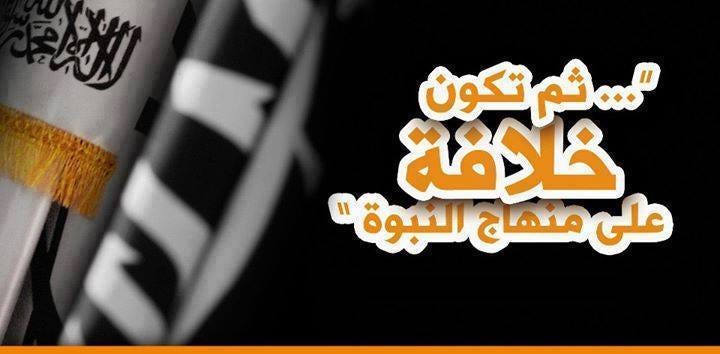
Does the Hadith about the 5 periods of Rulership in Musnad Ahmad and that the last of times will be a righteous Caliphate (Khilafah Ar-Rashidah), apply to Modern times or not ?


Does the Hadith about the 5 periods of Rulership in Musnad Ahmad (مسند احمد)and that the last of times will be a righteous Caliphate (Khilafah Arrashida), apply to Modern times or not ?


فقد روى الإمام أحمد عن النعمان بن بشير رضي الله عنه الله، قال: كنا جلوساً في المسجدفجاء أبو ثعلبة الخشني فقال: يا بشير بن سعد أتحفظ حديث رسول الله صلى الله عليهوسلم في الأمراء، فقال حذيفة: أنا أحفظ خطبته. فجلس أبو ثعلبة.
فقال حذيفة: قال رسول الله صلى اللهعليه وسلم: تكون النبوة فيكم ما شاء الله أن تكون، ثم يرفعها الله إذا شاء أنيرفعها، ثم تكون خلافة على منهاج النبوة فتكون ما شاء الله أن تكون، ثم يرفعهاالله إذا شاء أن يرفعها، ثم تكون ملكًا عاضًا فيكون ما شاء الله أن يكون، ثميرفعها إذا شاء الله أن يرفعها، ثم تكون ملكًا جبرية فتكون ما شاء الله أن تكون،ثم يرفعها الله إذا شاء أن يرفعها، ثم تكون خلافة على منهاج النبوة، ثم سكت. قالحبيب: فلما قام عمربن عبد العزيز، وكان يزيد بن النعمان بن بشير في صحابته، فكتبت إليهبهذا الحديث أذكره إياه. فقلت له: إني أرجو أن يكون أمير المؤمنين — يعني عمر — بعد الملك العاضوالجبرية، فأدخل كتابي على عمر بن عبد العزيز فَسُرَّ به وأعجبه.
It was narrated by Ahmed in his Musnad, from Al-Nu’man b.Bashir, who said: “We were sitting in the mosque of the Messenger of Allah(saw), and Bashir was a man who did not speak much, so Abu Tha’labah Al-Khashnee came and said: ‘Oh, Bashir bin Sa’ad, have you memorized the words of the Messenger of Allah (saw) regarding the rulers?’ Huthayfah replied, ‘I have memorized his words’. So Abu Tha’labah sat down and Huthayfah said, ‘The Messenger of Allah (saw) said ‘Prophet-hood will be among you as long as Allah wishes, then He will lift it up when He wishes to lift it up. Then there will be a Khilafah on the way of the Prophet, and it will be as long as Allah wishes it to be, then Allah will lift it up when He wishes to lift it up. Then there will be an inheritance rule (ملكًا عاضًا),and it will last as long as Allah wishes it to, then Allah will lift it up ifwhen He wishes to lift it up. Then there will be a coercive rule(ملكًا جبرية), and it will last aslong as Allah wishes it to be, then Allah will lift it up when He wishes to liftit up. Then there will be a Khilafah on the way of Prophet-hood.’ Then he (saw)was silent.” Habib said: “When Umar ibn AbdulAziz became caliph I wrote tohim, mentioning this tradition to him and saying, “I hope you will be thecommander of the faithful after the biting and the oppressive kingdoms.”It pleased and charmed him, i.e. Umar ibn AbdulAziz.”
Reference: Masnad Ahmed bin Hanbal (Hadith # 18430) ,As-Saheeha al-Albani (Hadith # 5). It has been declared Hasan by Sh’uaibArnaoot, and al-Albani classified it as Sahih. The text quoted is the one fromMasnad Ahmed.
This hadith is informative in nature and does not carry any Hukm as such rather is depictive of a reality, there is a possibility that some people may get confused with its actual intended meaning and may mistake with their application of the periods as discussed in the hadith.
I have come across several kinds of explanations of the hadith recently with some commentators saying that the period of the second righteous Caliphate is that of Umar bin Abdul Aziz and they substantiate their viewpoint with the last part of the hadith where the narrator Habib said: “When Umar ibn AbdulAziz became caliph I wrote to him, mentioning this tradition to him and saying, “I hope you will be the commander of the faithful after the biting and the oppressive kingdoms.” It pleased and charmed him, i.e. Umar ibn AbdulAziz.”
There’s another viewpoint that some people carry and that is that if we take this hadith to refer to our times and that the Khilafah discussed in the last part of the hadith is yet to be established , that would simply imply that all rulers of Muslims before our times where despots and oppressors.
The correct way to study the subject
To understand the hadith, firstly we need to appreciate the fact that the hadithtalks about 5 different periods with clear distinctions between one period and the others. So the period of the righteous Khilafah after the prophet (saw) was different to the period that succeeded this period, i.e the Mulkan Aa’dan.Mulk here does not mean Kingdom rather means rulership [For more details refer to Mu’jam al waseet and Tajuluroos min jawahir al Qamoos]. As for the term aa’ddan it means biting and here it is used metaphorically to mean that the rulers will hold onto power as if they were biting on to power and this is why the Scholars referred this period to be the inheritance rule, this is the period that started with mua’wiya (ra) who appointed his son yazid to power.
This period continued until 1924 when the last remains of the UthmaniKhilafah was dismantled and it was then replaced with the Psuedo-Democratic, Secular Nationalist states which oppressed its masses.
These states brought turmoil and killings on its people of a scale which humanity had never seen before and they replaced the Shariah with the Man-made laws and relegated the Law of God to the Masjids and the Courts OfNikah.
We should remember that even this understanding cannot be considered as a correct & accurate understanding but when we compare the realities as described in the hadith, the application which we have described here is in line with the reality.
As for the issue that the second righteous Khilafah was established at the time of Umar bin Abdul aziz, there are a few points.
Firstly, the hadith ends where the narrator makes the statement ‘then the prophet stopped”, After that it is the opinion of the narrator that is presented and it is merely his wish that is being discussed here that he hoped that Umar bin Abdul aziz was that righteous Khalifah. He understood the 3 khalifahs after Ali (Ra) to constitute the period of hereditary rule and the period of oppression, however we need to understand that the hadith refers to a period of oppression and a period of hereditary rule and a period cannot be taken to mean the rule of one ruler or two, rather it is the manifestation of a trend and behavior for a period of time that is being indicated here, this is what Albani (rah) says in his book silsilah asaheeha:
ومن البعيد عندي جعل الحديث على عمر بن عبد العزيز؛لأن خلافته كانت قريبة العهد بالخلافة الراشدة، ولم يكن بعد ملكان ملك عاض وملك جبري.والله أعلم.
“it is far fetched for me to say that the hadith applies to umar bin abdul aziz because his khilafah was close to the period of the (first)khilafah arrashida and after this first khilafah arrashida twoperiods that is the period of hereditary rule and the period of oppression did not take place. Allah knows best”
Secondly, even if we were to take into consideration that the opinion of the narrator is correct and that indeed with Umar bin abdulaziz the second righteous caliphate had started and ended ,we should remember that the implementation of the rule of Allah (swt) is a fard and that it is a sin to remain under the authority of the ruler who rules by kufr.
Just because an informative hadith leads to a different understanding cannot mean that the ayat which command the muslims to rule by the book of Allah (swt) and gives warnings about those who rule by other than what allah (swt) sent be left aside or reinterpreted ? The question that needs to be answered now is — Because umar bin abdulaziz was the second righteous Caliphate does it mean that The Muslims no longer need to apply the Shariah ?
Allah (swt) Says:
أَفَحُكْمَالْجَاهِلِيَّةِ يَبْغُونَ وَمَنْ أَحْسَنُ مِنَ اللَّهِ حُكْمًا لِقَوْمٍيُوقِنُونَ
Do they then seek the judgement of (the days of)Ignorance? And who is better in judgement than Allâh for a people who have firmFaith. [Maidah:50]
وَمَنْ لَمْ يَحْكُمْ بِمَا أَنْزَلَ اللَّهُ فَأُولَئِكَ هُمُ الْكَافِرُونَ
And whosoever does not judge by what Allâh has revealed,such are the Kâfirûn [Maidah:44]
وَمَنْلَمْ يَحْكُمْ بِمَا أَنْزَلَ اللَّهُ فَأُولَئِكَ هُمُ الظَّالِمُونَ
And whosoever does not judge by that which Allâh hasrevealed, such are the Zâlimûn [Maidah:45]
وَمَنْلَمْ يَحْكُمْ بِمَا أَنْزَلَ اللَّهُ فَأُولَئِكَ هُمُ الْفَاسِقُونَ
And whosoever does not judge by what Allâh has revealed(then) such (people) are the Fâsiqûn [Maidah:47|
قال الرازي: وهذا ضعيف لأن الاعتبار بعموم اللفظ لا بخصوص السبب. ثمنقل عن عكرمة: قوله: وَمَنْ لَمْ يَحْكُمْ بِما أَنْزَلَ اللَّهُ إنما يتناول منأنكر بقلبه وجحد بلسانه، أما من عرف بقلبه كونه حكم اللّه وأقر بلسانه كونه حكماللّه، إلا أنه أتى بما يضاده، فهو حاكم بما أنزل اللّه تعالى، ولكنه تارك له، فلايلزم دخوله تحت هذه الآية
Imam razi says in his tafseer: it is incorrect to assume that the ayat above apply to the Jews because “the consideration is given to the generality of the words and not the specificity of the cause” [this is a well known usuliprinciple] , and then he quoted Ikrimah — the one who does not rule by what allah has sent applies to the one who denies it by his heart and his tongue , as for the one who accepts by his heart that this is the rule of allah and accepts it by his tongue that this the rule of allah but does what is contradictory to the rule then he does not fall under this rule.
Ibn Abbas (ra) says
أن من لم يحكم بما أنزلالله جاحداً جاحداً به ، فهو كافر ، ومن لم يحكم مقراً به فهو ظالم فاسق ، وهذاقول ابن عباس .
“the one who does not rule by what allah (swt) has revealed and denies it , he is a kafir, and the one who does not rule by the rule of allah but accepts it is aZalim and a fasiq”
The prophet (saw) said:
سَتَكُونُأُمَرَاءُ فَتَعْرِفُونَ وَتُنْكِرُونَ فَمَنْ عَرَفَ بَرِئَ وَمَنْ أَنْكَرَسَلِمَ وَلَكِنْ مَنْ رَضِىَ وَتَابَعَ ». قَالُوا أَفَلاَ نُقَاتِلُهُمْ قَالَ «لاَ مَا صَلَّوْا »
“Amirs will be appointed over you, and you will find them doing good deeds as well as bad deeds.The one who hates their bad deeds is absolved from blame, the one who disapproves of their bad deeds is also safe, but the one who approves and follows is doomed.” It was said: “O Messenger of Allah! Should we not fight them with thesword?” He said: “No, as long as they continue to establish prayer amongstyou.”
The opinion of the scholars that the Ummah should be ruled by the book of Allah (swt) and the Sunnah of his messenger and that it should remain under the authority of an imam is a matter that the scholars extensively wrote about:
Imam abu ul-Hasan al-Mawardi (rh.a.) said, “”The contract of the Imamah(leadership) for whoever is standing with it, is an obligation by Ijmaa’a(consensus)”. (al-Ahkam us-Sultaniyyah [Arabic] p56.)
Imam Ahmed (rh.a.) said: “”The Fitna (mischief and tribuulations) occurs when there is no Imaam established over the affairs ofthe people”.
Abu Hafs Umar al-Nasafi (rh.a.) a noted scholar of the 6th century Hijri states;
“The Muslims simply must have an Imam (Khaleefah),who will execute the rules, establish the Hudud (penal system), defend the frontiers, equip the armies, collect Zakah, punish those who rebel (against the state) and those who spy and highwaymen, establish Jum’ah and the two ‘Eids, settle the dispute among the servants (of Allah),accept the testimony of witnesses in matters of legal rights, give in marriage the young and the poor who have no family, and distribute the booty”.
Imam Al-Juzayri, an expert on the Fiqh of the four great schools of thought said regarding the four Imams, “The Imams (scholars of the four schools of thought- Shafi’i, Hanafi, Maliki, Hanbali)-may Allah have mercy on them- agree that the Imamah (Leadership) is an obligation, and that the Muslims must appoint an Imam who would implement thedeen’s rites, and give the oppressed justice against the oppressors”.(“Fiqh ul-Mathahib ul- Arba’a” [the Fiqh of the four schools ofthought], volume 5, page 416.)
As for the understanding that if we take this hadith to refer to our times and that the Khilafah discussed in the last part of the hadith is yet to be established that would simply imply that all the rulers of Muslims before our times were despots and oppressors — this understanding arises because of mixing between the concept of Mulkan Aaddan and Mulkan Jabriyy.
The two periods are distinct with clearly different behavioral traits exhibited by the rulership with in them. The mulkan aaddan isdistinct due to the rulership held in a clan or a family , however the rulers of this period implemented the rule of Allah (swt), this is apparent from the record of their courts and the fatwas issued and the books that where written during that time and the 100’s of books of history that documented their affairs, they all indicate that the rulers during the time of Abbasids, Umayyad and theOttommans ruled by the book of Allah. There are indications that there were transgressions that happened however, none led the rulership to become one that was out of Islam. This is offcourse while keeping in consideration that there were certain rulers who indeed left the fold of Islam like Akbar, the Mughal ruler who tried to create a new religion — Deen iIlahi.
The Mulkan Aa’ddan period can be understood to have ended with the destruction of the Ottoman Khilafah but this is debatable as some scholars say that it ended a few years prior to the destruction of the ottoman Khilafah when the western forces had occupied large swathes of Turkey.
The period of Mulkan Jabriyy is distinct due to its oppression, the oppression being manifest in aspects of deen where they removed the deen from the life affairs to that of the masjid only and the torture of people and taking away their wealth. These are but a few of the manifestations of this period which we all are living through. Todays rulers, Sisi, Salman, bashar assad, Mubarak, all fall under this period and it is these who form the crux of the Oppressive rulers.
The sincere observant of history and global politics will appreciate that thehadith talks about our times indeed and that there is no doubt that we are in the period of Mulkan Jabriyy (the Oppressive Rule) and it is inevitable that the prophesied Khilafah Arrashida will be a period after this.
--

Abu Khaled Al Hejazi

Geo-Political observer & commentator. Tech Enthusiast. Digital Entrepreneur. Hafidh Al Quran, Recieved Ijaza in Shariah. A Humble student of of Islamic Sciences